
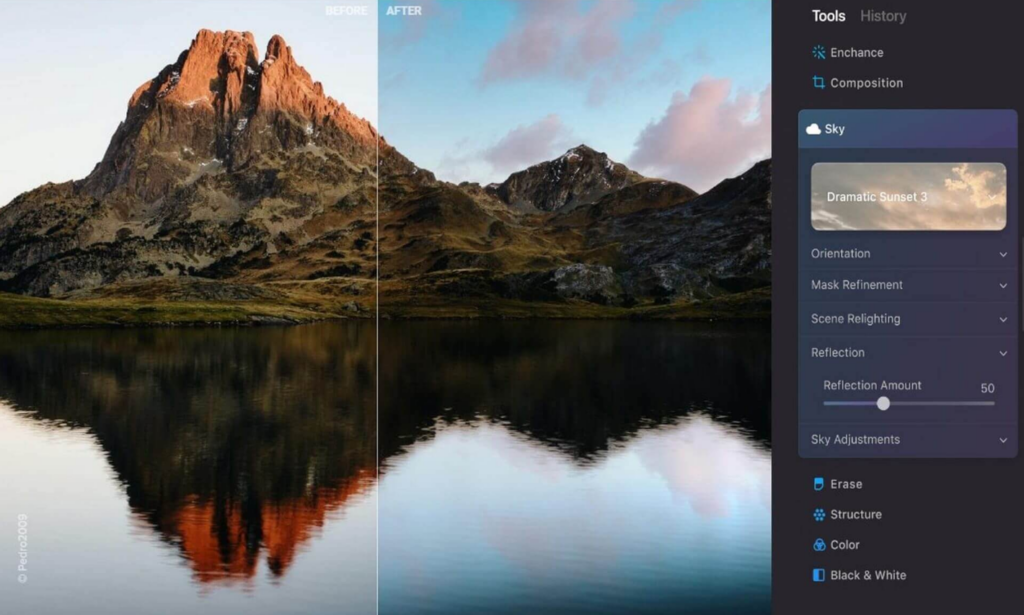
The primary advantage of a desktop ai photo editor for Windows or ai photo editor for Mac is performance and privacy. By harnessing the full power of your computer’s CPU and GPU, these applications can process complex ai photo retouching tasks locally at astonishing speeds, without the latency or upload constraints of a cloud-based service. More importantly, they keep your original image files securely on your own hardware, a critical consideration for professionals handling sensitive client work or those working in locations with unreliable internet, making them a cornerstone of a secure professional photo editing practice.
When evaluating these tools, one must look beyond the AI label and examine the underlying technology and specificity of features. Some desktop applications are broad-spectrum advanced photo editing software with AI features bolted on, offering smart selection tools and content-aware fill. Others are highly specialized ai tool for photo culling and editing engines designed for one thing: ingesting a massive shoot and outputting a polished gallery with minimal input. Your choice depends on whether you need a versatile Swiss Army knife or a surgical instrument. For a wedding photographer, the latter might be ideal; for a commercial retoucher, the former’s integration with Photoshop might be paramount.
A key differentiator is the software’s ability to learn and adapt to your personal style, evolving from a generic tool into your personal professional ai photo editor. Look for applications that allow you to train custom AI models on your own edited images. By feeding the system examples of your finished work, it can learn your preferences for contrast, saturation, skin tone handling, and even compositional cropping. This level of customization is what separates a generic smart photo editing software from an intelligent partner that genuinely accelerates your workflow, not just *a* workflow.
Integration remains a critical, often overlooked, factor. The best ai photo editor desktop app should not force you to abandon your existing photo editing workflow software. Seamless round-trip editing, where you can send images from Lightroom to the AI app and back with all edits non-destructively intact, is a hallmark of professional-grade design. Furthermore, consider the developer’s update cycle and community support; AI technology is advancing rapidly, and you need a vendor committed to continually refining its algorithms and adding new, practical features based on user feedback from working photographers.
Choosing the right desktop ai photo editing software ultimately comes down to aligning the tool’s architecture with your operational realities and creative goals. If uncompromising data security, predictable offline performance, and deep customization are your priorities, a robust desktop solution is likely your best bet. It represents a one-time or periodic investment in a powerful engine that lives on your machine, becoming a core, reliable component of your fast ai photo editor for professionals toolkit. This choice empowers you with full control over your creative process and the sensitive data that fuels it.